

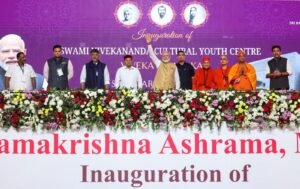




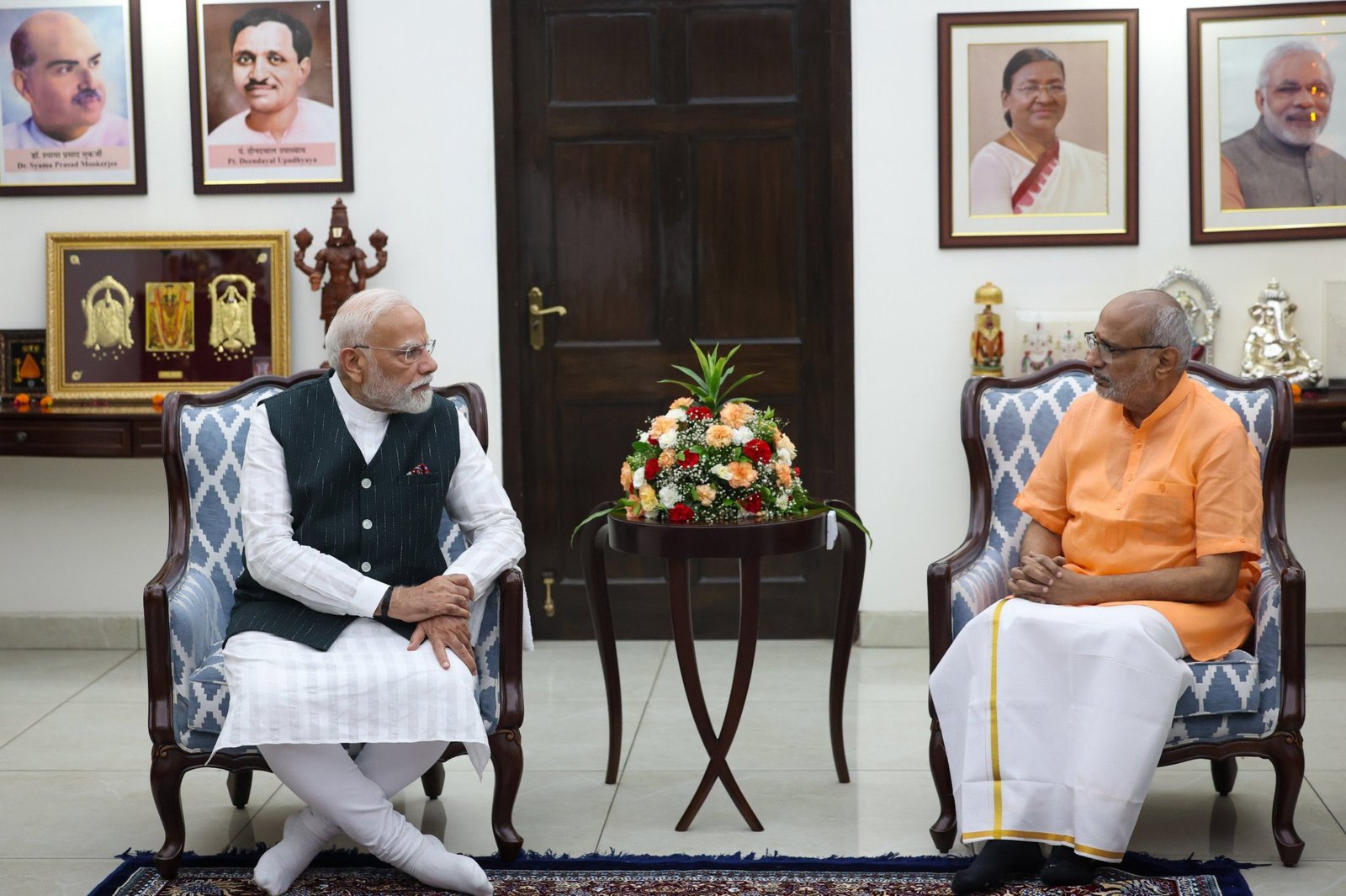
India witnessed a significant moment in its democratic journey as Chandrapuram Ponnusamy Radhakrishnan, commonly known as C.P. Radhakrishnan, was elected as the 15th Vice President of the Republic of India. This election, marked by a high-stakes contest between the ruling National Democratic Alliance (NDA) and the opposition INDIA bloc, followed the unexpected resignation of former Vice President Jagdeep Dhankhar on July 21, 2025, due to health concerns. Radhakrishnan’s victory, with 452 votes against the 300 secured by his opponent, Justice B. Sudershan Reddy, not only underscores the NDA’s parliamentary strength but also signals a strategic political move by the Bharatiya Janata Party (BJP) to consolidate its influence in southern India, particularly Tamil Nadu, ahead of crucial state elections. This article explores the significance of Radhakrishnan’s election, his background, the political dynamics of the vice-presidential race, and the implications for India’s political and constitutional landscape.
The Election: A Test of Parliamentary Strength
The 2025 vice-presidential election was a closely watched event, not only because it was triggered by an early vacancy but also due to the ideological battle it represented. The election was held just 50 days after Jagdeep Dhankhar’s resignation, making it the first early vice-presidential election since 1987. Conducted under the provisions of Article 68 of the Indian Constitution, the election required a secret ballot by an electoral college comprising 781 members of both houses of Parliament—542 from the Lok Sabha and 239 from the Rajya Sabha. The majority mark was set at 391 votes, but after 15 invalid votes and one cancelled postal ballot, the effective majority was adjusted to 377 Shri C.P. Radhakrishnan, the NDA’s nominee and the Governor of Maharashtra at the time, secured a decisive victory with 452 first-preference votes, comfortably surpassing the required majority. His opponent, Justice B. Sudershan Reddy, a former Supreme Court judge and the INDIA bloc’s candidate, polled 300 votes, a figure that highlighted both the opposition’s unity and its limitations due to cross-voting and abstentions by some regional parties. Notably, 13 MPs, including seven from the Biju Janata Dal, four from the Bharat Rashtra Samithi, one from the Shiromani Akali Dal, and one independent, abstained from voting, reflecting the complex political alignments at play. The election process, overseen by Rajya Sabha Secretary General as the returning officer, was conducted smoothly between 10 AM and 5 PM on September 9, with a remarkable 98.2% turnout. Prime Minister Narendra Modi was the first to cast his vote, followed by prominent leaders from both the ruling coalition and the opposition, including Union Ministers Amit Shah, Rajnath Singh, and Congress leaders Rahul Gandhi, Sonia Gandhi, and Mallikarjun Kharge. The high turnout underscored the significance of the vice-presidential office, which, while largely ceremonial, carries immense constitutional weight as the ex-officio Chairperson of the Rajya Sabha.







+ There are no comments
Add yours