






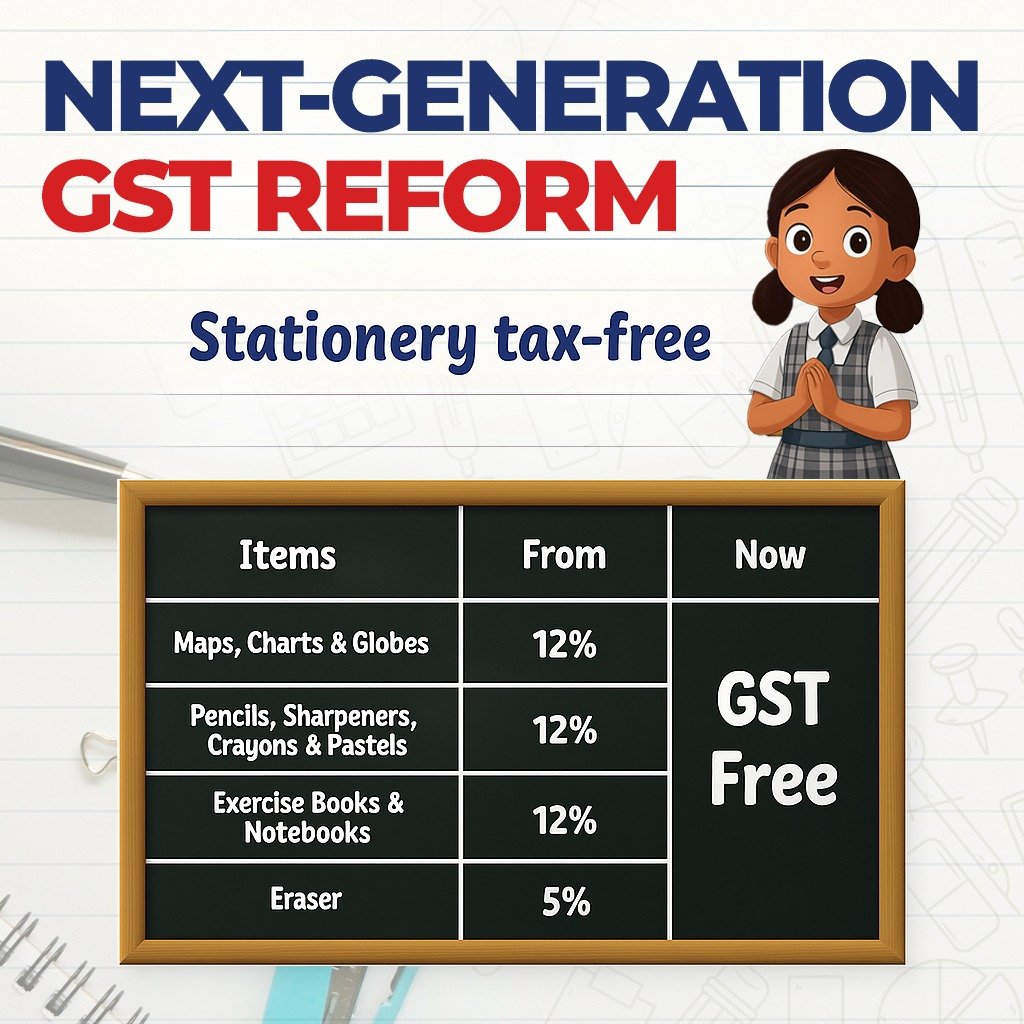
On September 22, 2025, India ushered in a transformative phase of its tax regime with the rollout of GST 2.0, a simplified two-tier Goods and Services Tax structure aimed at easing the burden on consumers and boosting economic growth. The new system, effective from midnight, replaces the previous multi-slab framework with just two rates—5% and 18%—while exempting essential goods and services from taxation entirely. This landmark reform, championed by Prime Minister Narendra Modi, has been dubbed a “bachat utsav” (festival of savings), reflecting its consumer-friendly approach.
Under GST 2.0, daily essentials such as hair oil, soaps, shampoos, toothpastes, bicycles, kitchenware, UHT milk, paneer, and all Indian breads, including paratha and naan, now attract 0% GST. Additionally, life and health insurance premiums have been made tax-free, a move expected to enhance insurance penetration across the country. The reform aligns with Modi’s vision of promoting “swadeshi” (Made in India) products, particularly in agriculture, textiles, and manufacturing, to foster self-reliance and stimulate local industries. Companies have already begun adjusting prices, with products like Rail Neer bottled water seeing immediate reductions, delighting consumers.
The simplified tax structure addresses long-standing criticisms of the original GST, introduced in 2017, which was often deemed complex due to its multiple slabs and compliance challenges. By streamlining rates and clarifying input tax credit rules, GST 2.0 aims to reduce compliance costs for businesses while ensuring affordability for households. Industry leaders have welcomed the move, with many anticipating a surge in demand for essentials as prices drop. The government has also released detailed FAQs to guide businesses through the transition, ensuring clarity on tax credits and exemptions.
PM Modi, in his address, urged citizens to embrace locally-made products to strengthen India’s economy. Analysts predict that GST 2.0 will not only boost consumer spending but also enhance India’s global competitiveness by simplifying trade logistics. However, challenges remain, including ensuring smooth implementation and addressing concerns from small businesses adapting to the new rates. As India celebrates this economic milestone alongside cultural festivities like Navratri, GST 2.0 marks a bold step toward a more inclusive and dynamic economy, promising savings and growth for all.








+ There are no comments
Add yours