






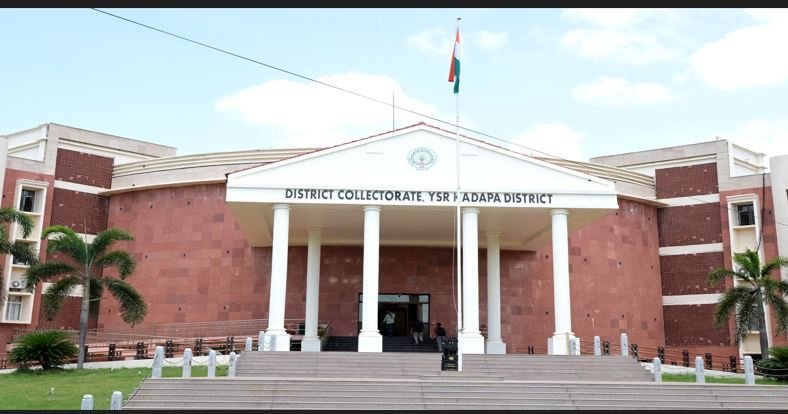
Vijayawada, September 24, 2025 – In a decisive move to uphold municipal governance standards, the Andhra Pradesh government has dismissed Kothamaddi Suresh Babu from his position as Mayor of Kadapa Municipal Corporation, invoking Section 679(B)(1) of the Greater Hyderabad Municipal Corporation (GHMC) Act, 1955. The removal, effective immediately, stems from serious allegations of rule violations involving the awarding of public contracts to a family-owned firm, highlighting ongoing efforts to curb corruption in local bodies.
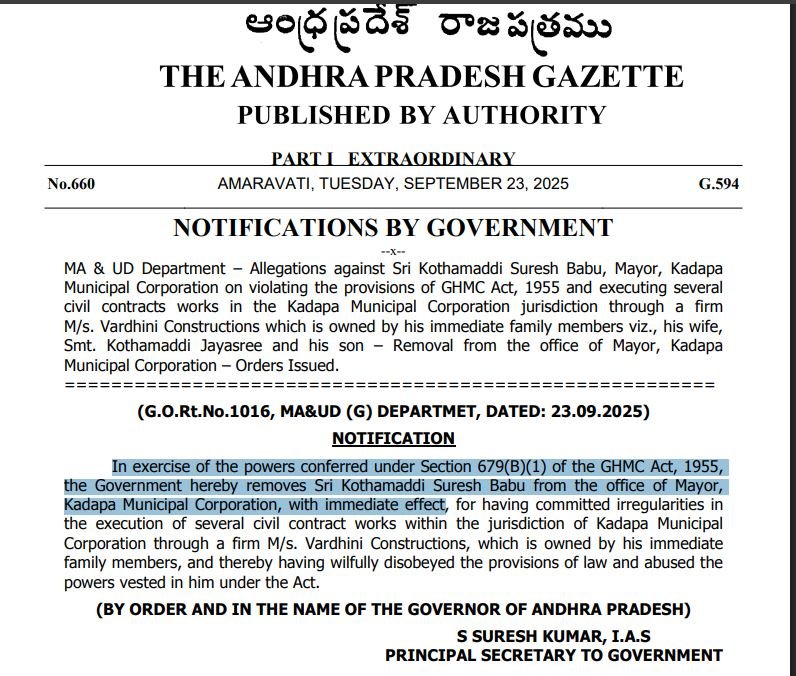
The official order, issued by the Municipal Administration and Urban Development Department, accuses Babu of contravening provisions under Clause 22-1(h) of the GHMC Act and related rules from 1955 and 1956. Specifically, the mayor is alleged to have facilitated civil works contracts totaling approximately ₹55.64 lakh to Vardhini Constructions, a company in which his wife, Kothamaddi Jayasree, and son, Amaresh, hold partnership interests. Jayasree, a seasoned politician who previously served as sarpanch of Chinna Chowk village and corporator in the Kadapa Municipal Corporation (KMC), is listed as an active partner.
A detailed vigilance inquiry, prompted by a complaint from Kadapa MLA Reddappagari Madhavi (TDP), uncovered these irregularities. The report from the Director General of Vigilance and Enforcement emphasized that Babu, fully aware of the disqualification clause, bypassed mandatory disclosures and council approvals. Of the 10 contracts in question, seven worth ₹33.65 lakh were already completed, raising concerns about potential financial losses to public funds. Municipal Administration Principal Secretary S. Suresh Kumar underscored in the termination notice that such actions undermine the integrity of local administration and disqualify the individual from holding office.
Babu, a prominent YSR Congress Party (YSRCP) leader serving his second term as mayor since his re-election in March 2021, received a show-cause notice on March 24, 2025. In his response dated May 7, he denied prior knowledge of the contracts, claiming they fell below the ₹10 lakh threshold requiring council oversight and were managed solely by the Municipal Commissioner. However, authorities rejected these defenses, citing evidence of undue influence and misuse of position.
This dismissal escalates a long-simmering feud between Babu and MLA Madhavi, marked by mutual corruption charges and procedural clashes. In December 2024, tensions boiled over during a KMC general body meeting when Madhavi was allegedly denied a seat and forced to stand, prompting her public vow to hold the mayor accountable. The YSRCP, which lost power in the 2024 state elections to the TDP-led NDA coalition, views the action as politically motivated, while government officials frame it as a commitment to transparent governance.
Babu has swiftly challenged the order in the Andhra Pradesh High Court, filing an urgent petition on May 16, 2025. Represented by advocate V.R. Reddy Kovvuri, he argued for insufficient opportunity to respond adequately, including the right to appear with legal counsel. Justice C. Gunaranjan heard initial arguments, questioning Babu’s role in pressuring officials, and adjourned the matter for a week to allow the Special Government Pleader time for further submissions.
The Kadapa Municipal Corporation, established in 1868 and upgraded in 2004, oversees a 164 sq km area serving over 344,000 residents. Babu’s ouster leaves a leadership vacuum, with Deputy Mayor Muntaz Begum likely to assume interim duties pending further directives. This incident parallels the government’s recent removal of Macharla Municipal Chairman Turaka Kishore Babu (YSRCP) on similar grounds, signaling a broader crackdown on post-election accountability.
As the High Court proceedings unfold, the case underscores the fragile balance between political rivalries and administrative ethics in Andhra Pradesh’s urban governance. Public reactions remain divided, with supporters decrying it as vendetta politics and critics hailing it as a victory for clean administration. The episode serves as a stark reminder of the stringent checks embedded in the GHMC Act to prevent conflicts of interest in public service.








+ There are no comments
Add yours