



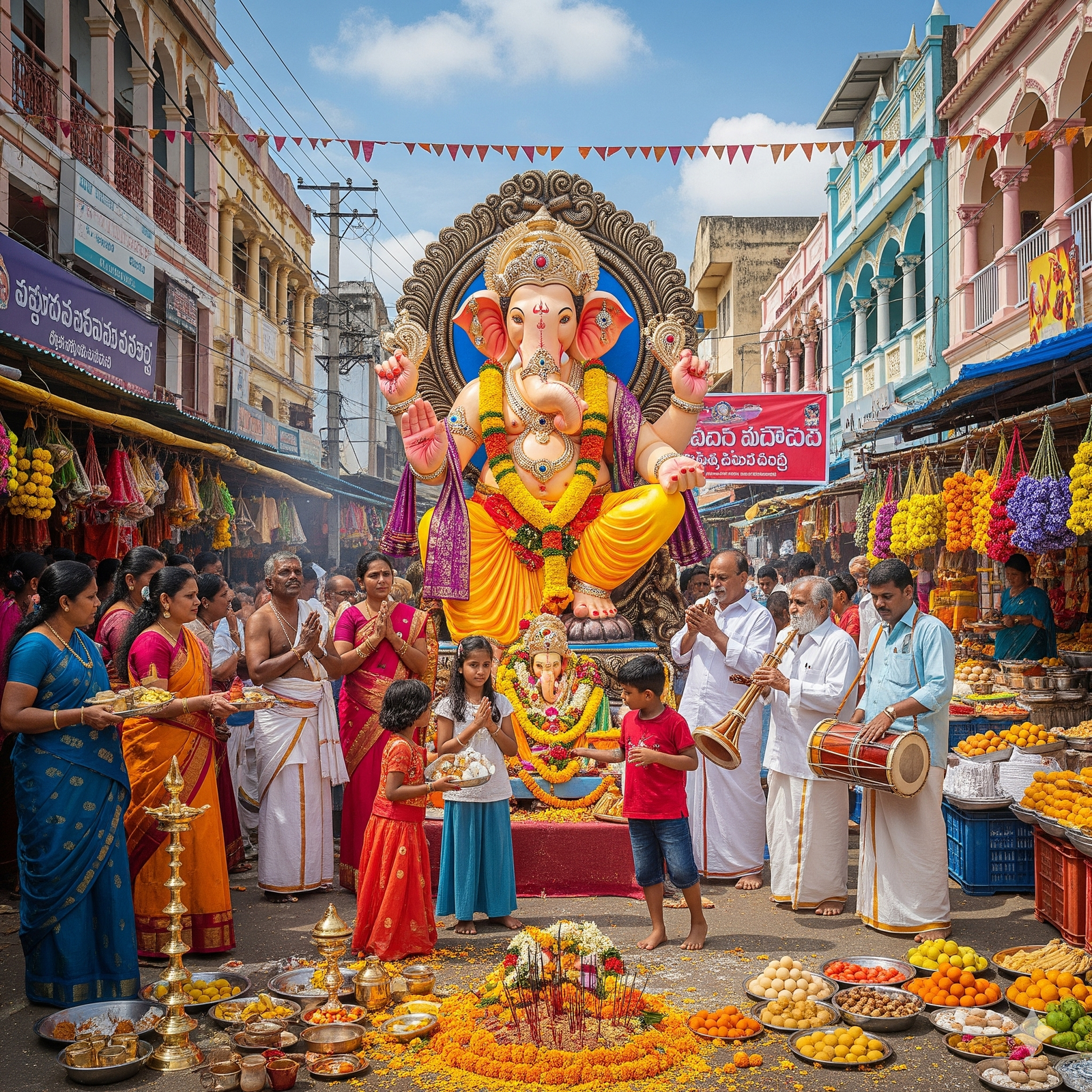
Ganesh Chaturthi, or Vinayaka Chavithi as it is known in the Telugu-speaking states, is not just a festival in Andhra Pradesh; it is a vibrant, ten-day celebration that transforms the landscape and the hearts of its people. While the festival is famous for its grand scale in Maharashtra, Andhra Pradesh has its own unique flavor, characterized by an overwhelming sense of community, a deep reverence for tradition, and an increasingly creative and eco-conscious approach to the festivities. From the bustling cities of Visakhapatnam and Vijayawada to the hallowed grounds of Tirupati, the arrival of the elephant-headed god is an event that unites families and neighborhoods in a glorious spectacle of devotion and joy.
The Genesis of the Celebration: Tradition and Beliefs
The festival marks the birth of Lord Ganesha, the son of Shiva and Parvati, and the deity of wisdom, prosperity, and the remover of obstacles. His birth story, a tale of creation, conflict, and divine intervention, is central to the festival’s significance. In Andhra Pradesh, the celebrations typically begin on the fourth day of the Hindu month of Bhadrapada, known as Bhadrapada Chaturthi, a day believed to be the most auspicious for the birth of Ganesha.
The preparations begin weeks in advance. Artisans meticulously craft idols of Lord Ganesha, ranging from small, humble figures for home worship to colossal, magnificent murtis for public pandals. The air is filled with a sense of anticipation as markets overflow with puja materials, flowers, and sweets. The traditional puja items hold deep symbolic meaning, from the sacred 21 varieties of leaves and grasses (patris) to the beloved modaks and undrallu (sweet dumplings), which are considered Ganesha’s favorite treats.
Vinayaka Chavithi: A Public and Private Affair
The celebrations in Andhra Pradesh are a beautiful blend of private and public devotion. In homes, families install a clay idol of Ganesha and perform the Shodashopachara puja, a sixteen-step ritual of worship. The atmosphere is filled with the chanting of Vedic hymns and stotras dedicated to Ganesha. The family comes together to offer prayers, sing aarti, and share prasad. This intimate, domestic celebration fosters a sense of togetherness and spiritual well-being.
Parallel to this, the public celebrations are a grand spectacle. Every street corner, every residential colony, and every community sets up elaborate pandals (temporary structures) to house towering and creatively designed Ganesh idols. These pandals become centers of cultural activity, where people gather for daily aarti, devotional songs (bhajans), and cultural programs. In cities like Visakhapatnam and Vijayawada, these pandals are a major attraction, with organizers vying to create the most unique and eye-catching idols. For instance, in Visakhapatnam, past years have seen Ganesha idols made from paddy, puffed rice, coconuts, and even a staggering number of sarees, each with a message of sustainability or social welfare. These innovative creations not only capture the public’s imagination but also reflect a growing environmental consciousness. The Sri Sampath Vinayagar Temple in Visakhapatnam is also a major hub of celebrations, attracting a large number of devotees for its special alankaram and devotional performances throughout the festival.
The Creative Expression: Beyond the Idol
The creativity on display during Vinayaka Chavithi in Andhra Pradesh goes far beyond the materials used for the idols. The themes chosen for the pandals often reflect current events, social issues, or mythological narratives. This transforms the festival into a platform for artistic expression and community engagement. Youth organizations, residential welfare associations, and local businesses work tirelessly to create stunning displays that are both visually appealing and spiritually significant. The detailed decorations, the vibrant lighting, and the thematic representations add a layer of spectacle to the devotion.
The celebrations are also a culinary delight. The air is thick with the aroma of modaks, undrallu, and other traditional sweets prepared with jaggery, coconut, and rice flour. These sweets are a cornerstone of the festival, offered to the deity and then distributed among family and friends. The sharing of these delicacies strengthens community bonds and embodies the spirit of generosity.
The Grand Finale: Ganesh Visarjan and Its Meaning
After ten days of intense worship, music, and festivity, the celebrations culminate in the grand ritual of Ganesh Visarjan, or Nimajjanam in Telugu, on the day of Anant Chaturdashi. This final act is perhaps the most symbolic and emotionally charged part of the festival. The idols, which were so lovingly installed and worshipped, are taken in a spectacular procession to a nearby body of water—a river, a lake, or the sea.
The procession itself is a chaotic yet beautiful celebration. Thousands of people, young and old, take to the streets, dancing to the beats of traditional drums and devotional music. The air is filled with the thunderous chants of “Ganapati Bappa Morya, Pudhchya Varshi Lavkar Ya!” (O Lord Ganapati, come again early next year!). The energy is palpable, a mix of joyous farewell and hopeful anticipation. The journey to the immersion point is a final public display of reverence, bringing together the entire city in a shared expression of faith.
The visarjan is not merely an act of discarding an idol; it is a profound philosophical and spiritual act. It symbolizes the cycle of creation, preservation, and dissolution. The clay idol, representing Ganesha’s mortal form, is returned to the earth from which it came. This act signifies the temporary nature of all material forms and the eternal nature of the divine. As the idol dissolves in the water, it is believed that Ganesha returns to his celestial abode, carrying with him the misfortunes and obstacles of his devotees. The water, now infused with the divine energy, is believed to be purified.
A Shift Towards Sustainability
In recent years, the celebrations in Andhra Pradesh have seen a significant shift towards environmental consciousness. The use of traditional Plaster of Paris (PoP) idols, which are non-biodegradable and harmful to aquatic life, has been a major concern. In response, local governments, environmental groups, and communities themselves have been promoting the use of eco-friendly idols made from natural clay, turmeric, or other biodegradable materials.
This movement has been particularly strong in major cities. In Visakhapatnam, organizers have been at the forefront of this change, creating idols from reusable materials like paddy and sarees, which are later distributed to the needy. This eco-friendly approach not only protects the environment but also adds a layer of social welfare to the festival. The visarjan rituals are now often conducted in designated artificial ponds or tanks, preventing pollution of natural water bodies. This transition reflects a modern understanding of tradition, where the core values of devotion and community are upheld while adapting to the pressing need for environmental responsibility.
In conclusion, Ganesh Chaturthi in Andhra Pradesh is a beautiful confluence of deep-rooted tradition, communal harmony, and creative expression. It is a time when the state comes alive with a unique blend of spiritual fervor and public gaiety. From the quiet family prayers to the massive public processions, every aspect of the festival is a testament to the enduring faith and cultural richness of the region. The ten-day journey, from the auspicious installation to the symbolic immersion, is a powerful reminder of the cyclical nature of life and the ever-present blessings of Lord Ganesha, the remover of obstacles.





+ There are no comments
Add yours