





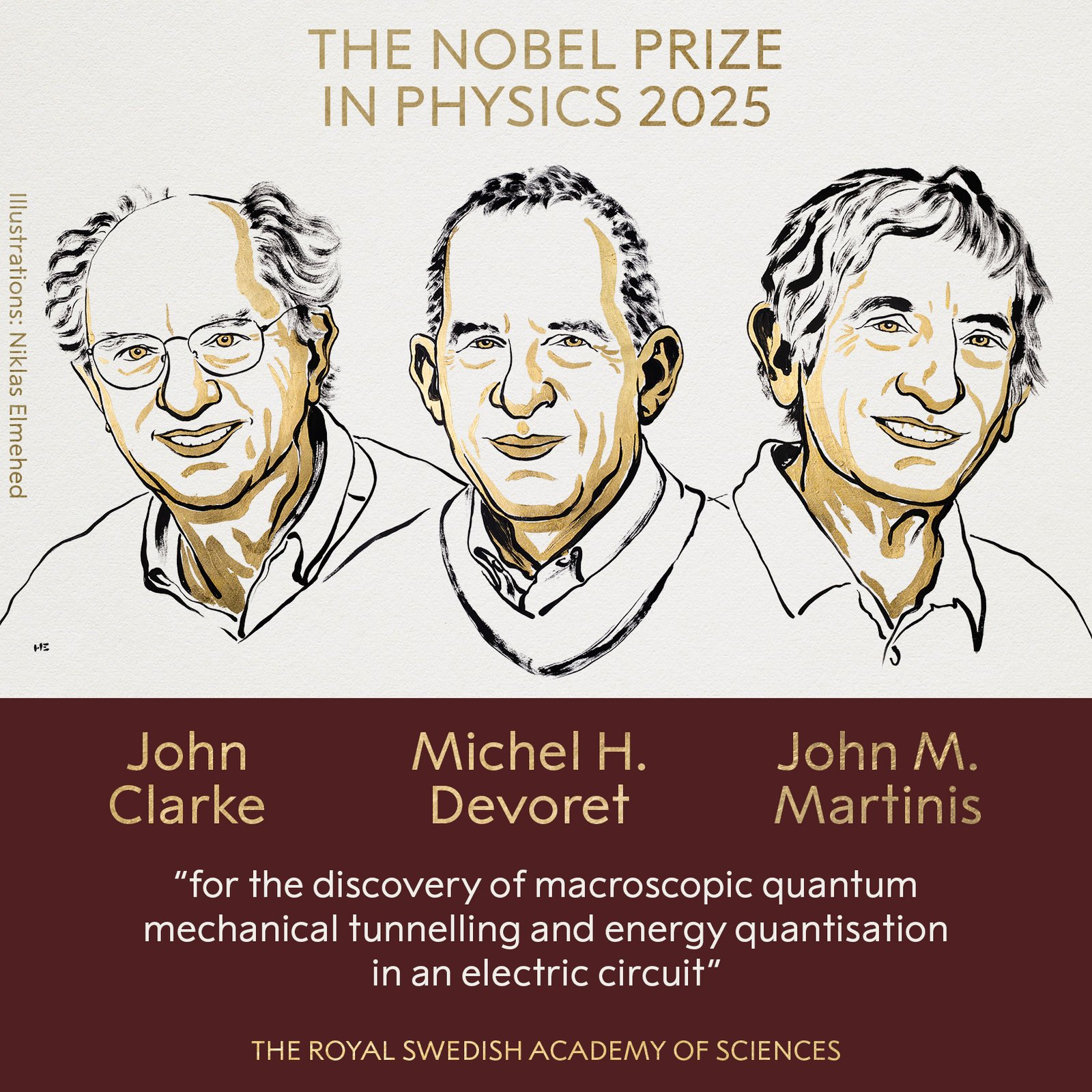
Stockholm, October 7, 2025 – The Royal Swedish Academy of Sciences has awarded the 2025 Nobel Prize in Physics to three pioneering scientists—John Clarke of UC Berkeley, Michel H. Devoret of Yale University and UC Santa Barbara, and John M. Martinis of UC Santa Barbara—for their groundbreaking experiments demonstrating macroscopic quantum mechanical tunneling and energy quantization in electric circuits. This discovery, which bridges the quantum world of subatomic particles with everyday electrical circuits, has laid the foundation for superconducting qubits essential to modern quantum computers, sensors, and cryptography systems.
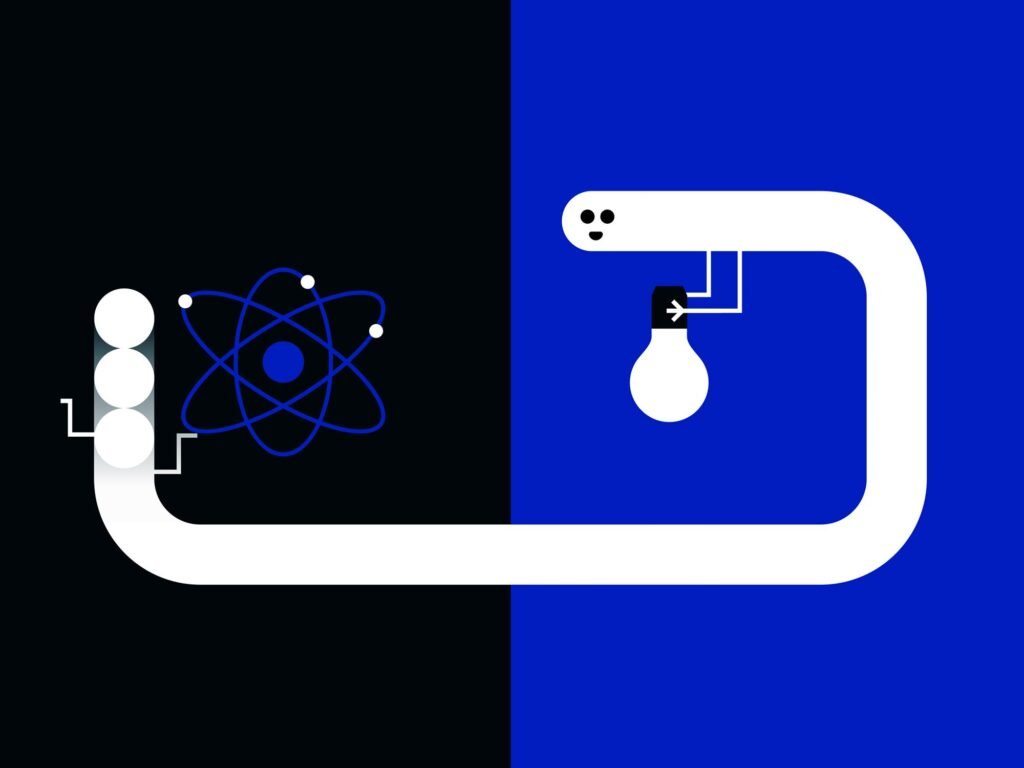
The laureates’ work in the 1980s involved creating superconducting circuits—devices that conduct electricity without resistance—allowing quantum effects like tunneling (where particles pass through barriers) and discrete energy levels to manifest on a macroscopic scale. Clarke’s experiments at UC Berkeley, inspired by theoretical physicist Anthony Leggett (a 2003 Nobel winner), used Josephson junctions to observe these phenomena, proving quantum mechanics applies beyond microscopic realms. Devoret and Martinis further advanced this at Yale and UC Santa Barbara, enabling practical applications in quantum information science.
The prize, worth 11 million Swedish kronor (about $1.17 million), split equally among the trio, recognizes contributions that have revolutionized digital technology’s future. As Irfan Siddiqi, UC Berkeley’s Physics Chair, noted, their work “kicked off an entire field,” influencing quantum computing leaders like Google Quantum AI. Clarke becomes UC Berkeley’s 27th Nobel laureate, while the award highlights quantum’s macroscale potential amid growing applications in secure communication and computation.














+ There are no comments
Add yours