



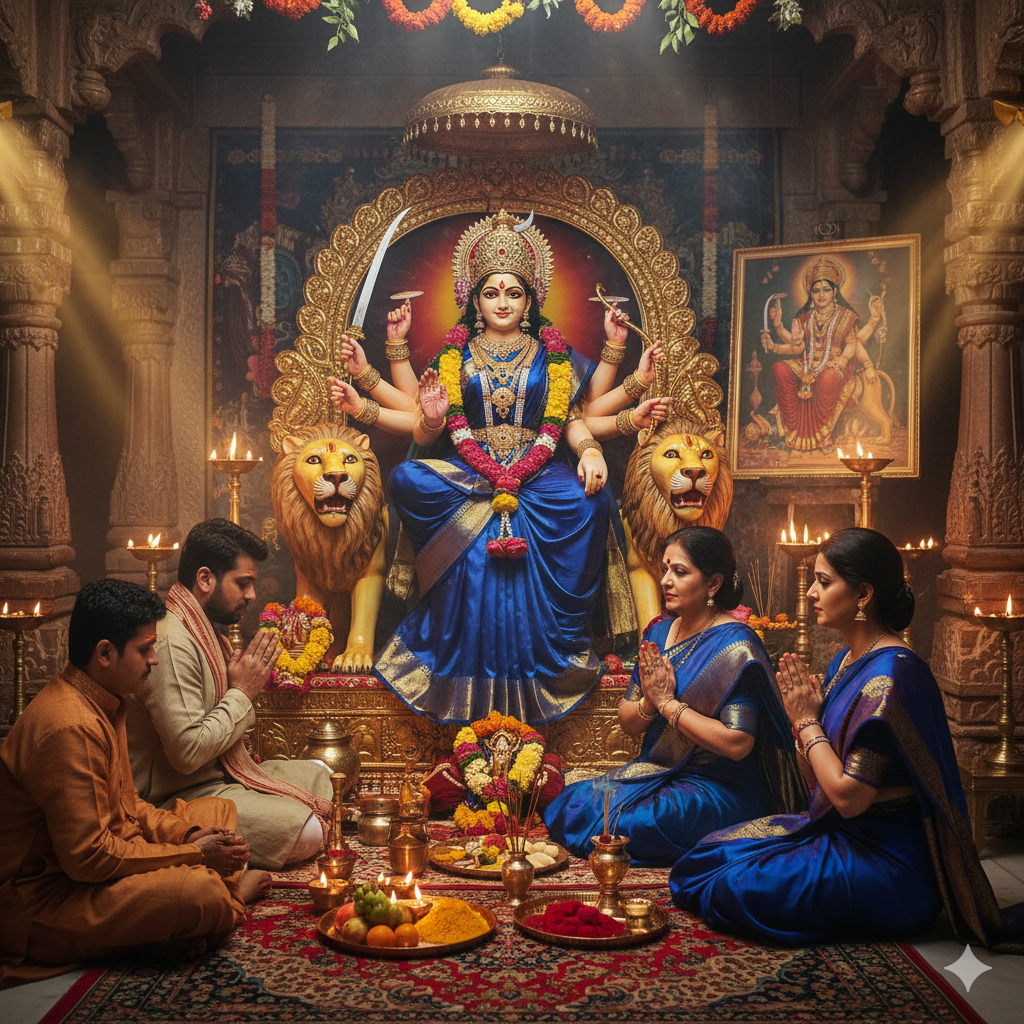
Today, as the auspicious festival of Navratri progresses into its third day, millions of devotees across India and beyond turn their prayers to Maa Chandraghanta, the revered third manifestation of Goddess Durga. This day holds profound spiritual significance, as Maa Chandraghanta embodies a unique blend of divine beauty, tranquility, and formidable strength, inspiring her followers to overcome fears and challenges with grace.
The Divine Form and Symbolism
Maa Chandraghanta is a captivating deity, instantly recognizable by the crescent moon adorning her forehead, which resembles a bell (ghanta), hence her name. Her iconography is rich with symbolism: she is often depicted riding a magnificent lion, symbolizing courage and control over one’s inner beast. With ten hands, she holds various weapons such as a trident, mace, sword, and bow-arrow, signifying her readiness to vanquish evil forces and protect her devotees. Despite this formidable weaponry, her overall demeanor is calm and composed, reflecting the peace she bestows upon her worshippers.
Devotees believe that worshipping Maa Chandraghanta blesses them with serenity, bravery, and spiritual enlightenment. Her divine energy is said to cleanse the mind, remove obstacles, and instill a sense of fearlessness, enabling individuals to confront life’s adversities with determination. She is the epitome of a warrior goddess who, even in battle, maintains a graceful and tranquil presence, teaching us to find our inner calm amidst chaos.
Rituals and Offerings
On the third day of Navratri, homes and temples resonate with fervent prayers and elaborate rituals dedicated to Maa Chandraghanta. Devotees wake up early, purify themselves, and meticulously set up their altars. The puja typically involves offering fresh flowers, especially fragrant jasmine and lotus, which are considered particularly pleasing to the goddess. Sweets, milk-based delicacies like kheer, and fruits are offered as bhog.
Chanting the sacred mantra, “Om Devi Chandraghantayai Namah,” is a central part of the worship, believed to invoke her blessings and strengthen one’s connection with the divine. Many also recite stutis (hymns) and aartis (devotional songs) in her honor. The atmosphere is charged with devotion, as families come together to seek her divine protection and guidance.
The Auspicious Hue: Royal Blue
Each day of Navratri is associated with a specific color, and for Day 3, the auspicious color is royal blue. This vibrant hue symbolizes tranquility, richness, and depth, perfectly mirroring Maa Chandraghanta’s powerful yet serene nature. Devotees often adorn themselves in royal blue attire to honor the goddess, believing that wearing her favored color helps attract her blessings and enhances their spiritual experience. It also serves as a visual reminder of the vastness of the cosmos and the profound inner peace that Maa Chandraghanta represents.
As the third day concludes, devotees carry forward the blessings of Maa Chandraghanta, embodying her strength and peace as they prepare for the subsequent days of Navratri, each dedicated to another glorious form of Goddess Durga. The worship of Maa Chandraghanta is a powerful reminder that true strength lies not just in might, but also in inner harmony and unwavering faith.







+ There are no comments
Add yours