






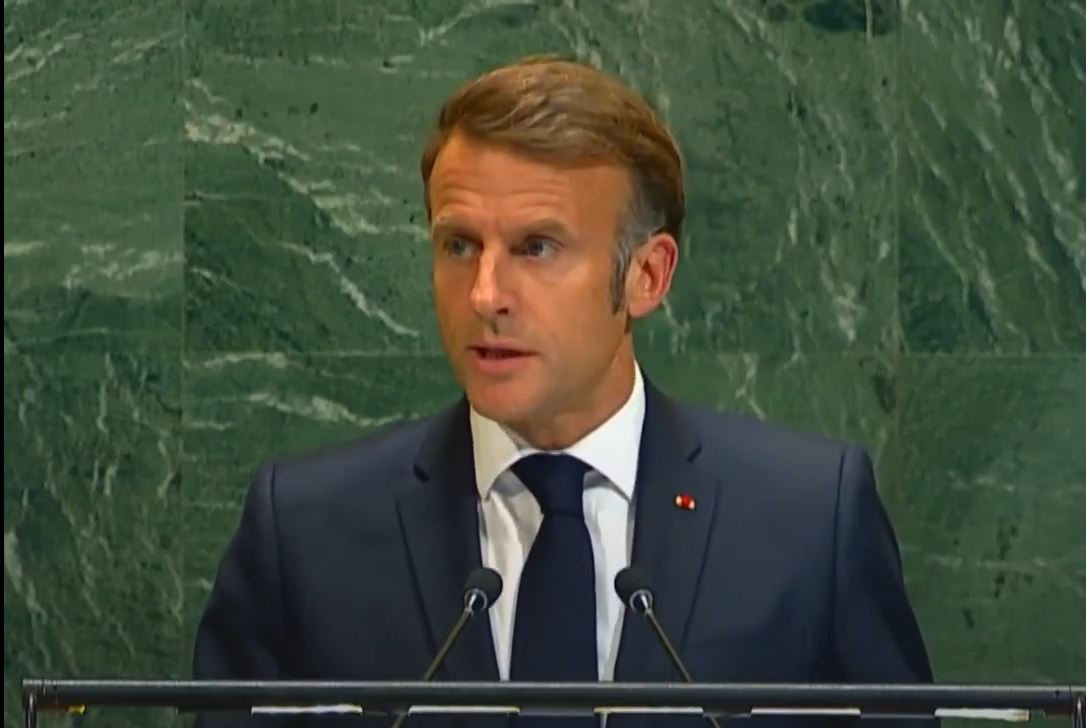
France made history at the 80th United Nations General Assembly (UNGA80) by formally recognizing the State of Palestine during a high-level summit in New York. President Emmanuel Macron, speaking alongside leaders from Saudi Arabia and other nations, declared the move a pivotal step toward a two-state solution, urging an immediate ceasefire in Gaza, where over 65,000 lives have been lost since October 2023. This bold decision, joined by Belgium, Luxembourg, Malta, Monaco, and Andorra, marks a turning point in Western diplomacy and amplifies global calls for Palestinian self-determination.
The summit, co-hosted by France and Saudi Arabia, aimed to revive stalled peace negotiations. Macron emphasized that recognizing Palestine is not just symbolic but a practical necessity to address the humanitarian crisis in Gaza, where famine looms and 40% of the population is displaced. “Peace requires justice, and justice demands a Palestinian state,” he stated, echoing sentiments from Palestinian Authority President Mahmoud Abbas, who joined via video link after being denied a U.S. visa. Abbas pledged reforms, including electoral changes, to strengthen Palestinian governance.
France’s move, the first by a G7 nation, brings the tally of countries recognizing Palestine to over 142. Belgium and others followed suit, while Japan signaled it may soon join, pending further reforms. The United Kingdom, Canada, and Australia had already recognized Palestine earlier in 2025, reflecting a growing European and Commonwealth shift. This wave of support contrasts sharply with the United States, where the Trump administration attempted to block the initiative through diplomatic pressure and sanctions on International Criminal Court officials investigating Israel.
Israel responded with fierce condemnation, with Prime Minister Benjamin Netanyahu labeling the recognitions a “reward for terrorism.” Israeli officials boycotted the summit, and far-right Minister Itamar Ben-Gvir threatened to dismantle the Palestinian Authority. Israel’s ongoing military operations in Gaza and settlement expansions in the West Bank have fueled global criticism, with the International Association of Genocide Scholars recently declaring Israel’s actions as genocide.
The recognitions are seen as a diplomatic earthquake, challenging U.S.-dominated mediation efforts. Experts argue they could bolster Palestine’s status in international forums and push for stronger UN resolutions. Social media platforms like X are abuzz, with #FreePalestine trending alongside polarized debates, some praising France’s “moral courage” and others warning of strained Israel-Europe ties.
As UNGA80 continues through September 30, the focus on a two-state solution intensifies, alongside discussions on climate change and nuclear disarmament. France’s leadership signals a new era of European activism in the conflict, potentially reshaping global alliances. For now, the world watches as Palestine’s flag rises in more capitals, while the path to peace remains fraught with challenges.










+ There are no comments
Add yours