







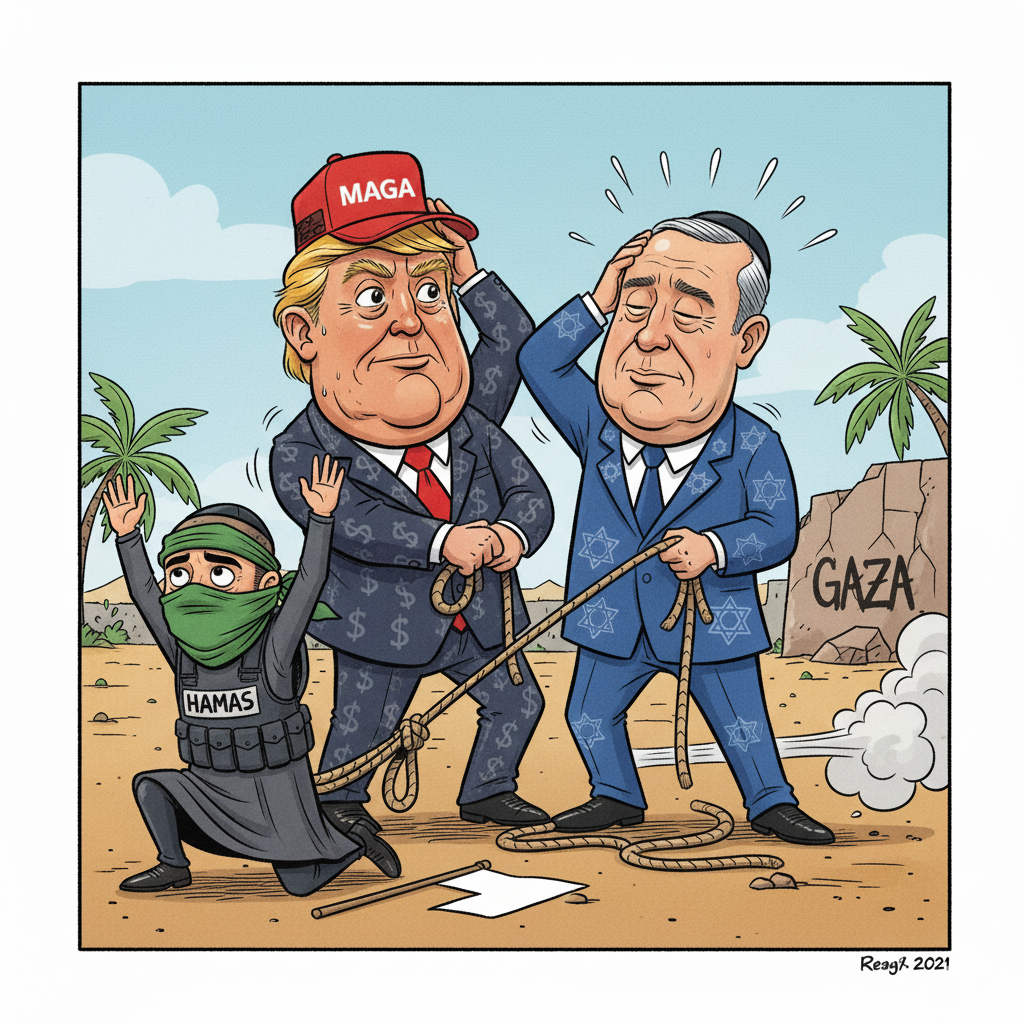
October 4, 2025 – In a potential turning point for the protracted Gaza conflict, Hamas announced on Friday its readiness to release all remaining Israeli hostages, alive or dead, as part of U.S. President Donald Trump’s 20-point peace plan for the region. The militant group, which has held approximately 48 hostages since its October 7, 2023, attack on Israel that killed around 1,200 people, stated it would proceed with the exchange provided “field conditions” are met, including an immediate ceasefire and Israeli military withdrawal.
The announcement came hours after Trump issued a stark ultimatum to Hamas, warning of “all hell” if the group did not accept the proposal by Sunday evening. In a post on Truth Social, Trump hailed the development as a step toward “lasting PEACE,” urging Israel to “immediately stop the bombing of Gaza” to facilitate a safe hostage extraction. “Right now, it’s far too dangerous to do that,” he added, emphasizing ongoing discussions to iron out details. This marks the first time since his return to office that Trump has publicly called for Israel to halt its military operations in Gaza, where over 65,000 Palestinians have been killed according to the Hamas-run health ministry.
Key Elements of Trump’s Proposal
Unveiled earlier this week alongside Israeli Prime Minister Benjamin Netanyahu, the plan outlines a multifaceted path to end the nearly two-year war:
- Immediate Ceasefire and Hostage Exchange: Hamas would release all 48 hostages (about 20 believed alive) within 72 hours, in exchange for Israel freeing 250 Palestinian prisoners serving life sentences and 1,700 detained since the war’s outset.
- Governance Transition: Hamas would relinquish control of Gaza to a Palestinian body of independent technocrats, backed by Arab and Islamic support, with an international “Board of Peace” overseeing reconstruction and security. The proposal leaves open a potential pathway to Palestinian statehood but does not mandate it.
- Disarmament and Aid: Hamas disarmament is required, alongside unrestricted humanitarian aid and Israeli withdrawal in phases. No forced population relocations would occur, though voluntary departures and returns are permitted.
- International Involvement: An International Stabilization Force, led by Arab partners, would handle security during the transition.
Hamas welcomed aspects of the plan, including the hostage release framework and handover of administration, but stopped short of full acceptance. The group seeks further negotiations on Gaza’s future governance and Palestinian rights, insisting these be addressed through a “unified Palestinian national framework” aligned with international law. Notably, Hamas did not commit to disarmament—a core Israeli and U.S. demand—and emphasized consultations with Palestinian factions.
Israel’s response has been mixed. Netanyahu’s office indicated preparations for the plan’s first phase, focusing on hostage release, but did not address Trump’s call to cease bombings. Reports suggest continued strikes in areas like Khan Yunis, even as overall bombardment eases slightly. Netanyahu has previously vowed to “finish the job” if Hamas rejects the deal, underscoring Israel’s insistence on Hamas’s complete neutralization.
Reactions and Challenges Ahead
Trump described the moment as a “big day” in an Oval Office address, framing it as a broader push for Middle East peace beyond Gaza. International mediators like Egypt, Qatar, and Turkey have welcomed the opening for talks, though they note elements requiring refinement. Families of hostages expressed cautious optimism but warned against premature celebrations, citing past broken promises.
Critics, including some Israeli voices on social media, fear that halting operations prematurely could embolden Hamas, potentially dooming the hostages. Hamas, meanwhile, has rejected non-Palestinian oversight in Gaza’s governance, viewing it as isolating the enclave from the broader Palestinian cause. With the Sunday deadline looming, mediators are convening urgently in Doha to bridge gaps.
If successful, this could mark the most significant breakthrough since the war began, averting further devastation and paving the way for reconstruction. However, unresolved issues like disarmament and long-term security remain hurdles, testing Trump’s diplomatic leverage and the willingness of all parties to compromise. As Trump put it, “This is not about Gaza alone—this is about long-sought peace in the Middle East.”













+ There are no comments
Add yours